Learn more about Structured Word Inquiry (SWI) by studying the spellings of some vocabulary words related to the Thanksgiving holiday: Thanksgiving, gratitude, turkey, cranberry, Thursday, squash, cornucopia, delicious, acorn, potato, corn, and pumpkin.
Structured Word Inquiry
English spelling is rule-based. There are no exceptions, just more rules to uncover. I have yet to find a word whose spelling cannot be explained. Structured Word Inquiry (SWI) is a means by which to study spelling. One can use SWI to investigate spelling by asking four questions:
1.) What does a word mean?
2.) How is the word built?
3.) What are morphological and etymological relatives of the word?
4.) What are the sounds that matter? What are the letters doing?
The questions are to be investigated in order.
Thanksgiving Vocabulary
Thanksgiving
1.) Thanksgiving is a noun that means (1) “an American holiday celebrated on the fourth Thursday of November” and “a Canadian holiday celebrated on the second Monday of October” and (2) “the expression of gratitude.”
2.) Thanksgiving is a compound-complex word, or a word that contains multiple bases and affixes (prefixes and/or suffixes).
<Thank + s + Give + ing → Thanksgiving>
First attested in the 1530s meaning “the giving of thanks,” Thanksgiving comes from the noun thanks and giving, the present participle of the verb give. In the specific sense of a “public celebration acknowledging divine favors, the word thanksgiving dates from 1630s.
The free base <Thank> comes from Middle English thanken from Old English þancian, þoncian and denotes “thought, gratitude, think, feel.”
The suffix -s comes from Middle English -es from Old English –as and marks a noun as plural.
The free base <Give> comes from Middle English given, gifen, geven, yeven, which comes from a merger of (1) Old English giefan, gifan, gefan, gyfan and (2) Old Norse gefa, gifa, givæ and denotes “bestow, deliver to another, allot, grant, commit, devote, entrust.”
The suffix -ing comes from Middle English -ing, -inge, -ynge from earlier -inde, -ende, -and from Old English -ende, -ing, -ungand and denotes “present particple suffix.”
3.) Both and compound and affix to form morphological relatives.
<Thank + s + Give + ing + s → thanksgivings>
<Thank + s → thanks>
<Thank + ed → thanked>
<Thank + ing → thanking>
<Thank + ful → thankful>
<un + Thank + ful → unthankful>
<Thank + less → thankless>
<Thank + ful + ness → thankfulness>
<Thank + Worth + y → thankworthy>
<Pick + Thank → pickthank>
<Give + s → gives>
<Give + en → given>
<Give + ing → giving>
<Give + er → giver>
<mis + Give + ing → misgiving> <Out + Give → outgive>
4.) The graphemes of Thanksgiving are <th.a.n.k.s.g.i.v.i.n.g>. The <th> is a digraph, or two letters that spell one sound. The <k> and final <g> mark the phonology of the <n> as spelling [ŋ].
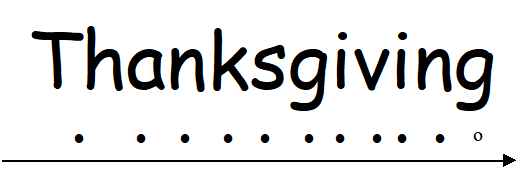
A complete English word cannot be spelled with a final <v>. If a complete native English word ends with the grapheme [v], then the word is spelled with a replaceable <e> after the <v>. The replaceable <e> on the end of give keeps the word from ending in <v>.
Gratitude
1.) Gratitude is a noun that means “the state of being grateful, thankfulness.”
2.) Gratitude is a complex word, a word that contains affixes (prefixes and/or suffixes).
<Grate + i + tude → gratitude>
First attested in the mid-1400s meaning “good will,” gratitude comes from Middle French gratitude and/or directly from Medieval Latin grātitūdinem (nominative grātitūdō) meaning “thankfulness” from Latin grātus meaning “thankful, pleasing.” Latinate gratitude displaced native Old English þancung “thanking.”
The bound base <Grate> comes from Latin grātus and denotes “favor, pleasing, agreeable.”
The connecting vowel -i- comes from Latin -i- and connects morphemes.
The suffix -tude comes from French -tude, from -ude; Latin -tūdō, from -ūdō and denotes “abstract noun suffix denoting a condition or state.”
3.) <Grate> compounds and affixes to form morphological relatives.
<Grate + ful → grateful>
<un + Grate + ful → ungrateful>
<Grate + i + Fy → gratify>
<Grate + i + Fy + es → gratifies>
<Grate + i + Fy + ed → gratified>
<Grate + i + Fy + ing → gratifying>
<con + Grate + ule + ate → congratulate>
<con + Grate + ule + ate + ion → congratulation>
<con + Grate + ule + ate + ion + s → congratulations>
<Grate + u + ite + ous → gratuitous>
<Grate + u + ite + y → gratuity>
<Grate + ule + ate + ion → gratulation> (happiness, joy)
<in + Grate → ingrate>
<in + Grate + i + ate → ingratiate>
4.) The graphemes of gratitude are <g.r.a.t.i.t.u.d.e>. The replaceable <e> marks the phonology of the <u>.
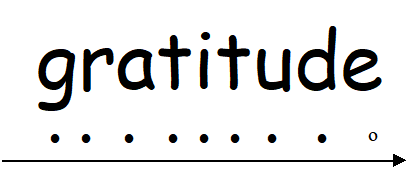
Notice that the <a> in gratitude spells a different phone than the <a> in grateful: [æ] in gratitude and [eɪ] in grateful.
Turkey
1.) Turkey is a noun that means “large North American bird similar to a chicken.”
2.) Turkey is a simple word, or a word that consists of a single morpheme (free base). The free base is <Turkey>.
First attested in the 1540s, turkey originally referred to the “guinea fowl,” a bird imported from Madagascar through the country Turkey and renamed guinea fowl when brought to Europe by Portuguese traders from West Africa. The large North American bird similar to a chicken (Meleagris gallopavo) now known as the turkey was domesticated by the Aztecs and then introduced to Spain by conquistadors in 1523 and then to the rest of Europe. The word turkey was first used to refer to the North American bird in English in the 1550s because (1) the North American bird was erroneously identified with or treated as a species of the guinea fowl and/or (2) the North American bird arrived in the rest of Europe from Spain through North Africa, which was then under Ottoman (Turkish) rule.
The country name Turkey comes from Middle English Turkye from Anglo-Norman Turkye from Medieval Latin Turcia from Turcus from Byzantine Greek Toûrkos from Classical Persian turk from Middle Persian twlk’ from Old Turkic t²ür²k̥.
The Turkish name for the bird is hindi, literally meaning “Indian,” and was probably influenced by Middle French dinde, a contraction of poulet d’inde, literally meaning “chicken from India,” a phrase based on the then-common misconception that the Americas were eastern Asia. After the two birds were distinguished as different species, turkey was erroneously retained for the American bird, instead of the African guinea fowl.
3.) <Turkey> affixes to form morphological relatives.
<Turkey → turkey>
<Turkey + s → turkeys>
<Turkey + ling → turkeyling>
<Turkey + ling + s → turkeylings>
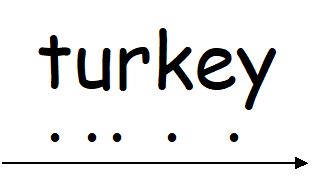
4.) The graphemes of turkey are <t.u.r.k.ey>. The <ey> is a digraph, or two letters that spell one sound.
Cranberry
1.) Cranberry is a noun that means “a small red edible berry of a swamp-growing shrub.”
2.) Cranberry is compound word, a word that consists of two or more bases.
<Cran + Berry → cranberry>
The bound base <Cran> is comes from Dutch Low Saxon and/or German Low German Kraan from Middle Low German kran, krāne from Old Saxon krano. (Another source of <Cran> is Middle English cran from Old English cran as in the placename Cranford. Both Old Saxon krano and Old English cran ultimately come from the same source: Proto-Germanic *kranô.)
The <Cran> in cranberry is a cranberry morpheme, or a type of bound morpheme that cannot be assigned an independent meaning or grammatical function but that nonetheless serves to distinguish one word from another.
First attested in the 1640s, cranberry is apparently an American English adaptation of Low German kraanbere, which is a compound of kraan meaning “crane” and Middle Low German bere meaning “berry”. The reason for the name is unknown but perhaps comes from a faint resemblance between the stamen of the plant and the beaks of cranes.
The free base <Berry> comes from Middle English berye from Old English berġe and denotes ” small roundish juicy fruit without a stone.”
The word cranberry also produces the clipped bound base <Cran> denoting “cranberry” as in the compounds cranapple and crangrape.
3.) <Cran> compounds with other bases. <Berry> both compounds and affixes.
<Cran + Berry + es → cranberries>
<Berry + es → berries>
<Berry + ish → berryish>
<Berry + Like → berrylike>
<Bay + Berry → bayberry
<Black + Berry → blackberry>
<Blue + Berry → blueberry>
<Dew + Berry → dewberry>
<Dingle + Berry → dingleberry>
<Dog + Berry → dogberry>
<Goose + Berry → gooseberry>
<Straw + Berry → strawberry>
<Tea + Berry → teaberry>
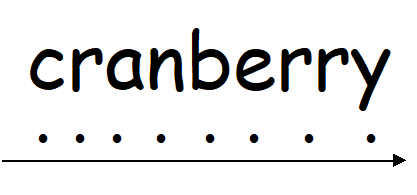
4.) The graphemes of cranberry are <c.r.a.n.b.e.rr.y>. The double <rr> functions as a digraph, or a grapheme that consists of two letters.
Thursday
1.) Thursday is a noun that means “the day that follows Wednesday and comes before Friday.”
2.) Thursday is a compound-complex word, or a word that contains multiple bases and affixes (prefixes and/or suffixes).
<Thur + s + Day -> Thursday>
Thursday comes from Middle English Thursday, Thuresday from Old English þursdæġ, þuresdæġ, which literally means “Thor’s day.”
The bound base <Thur> comes from Middle English Thur- from Old English þur-, þurr- and denotes “Thor.” Thor is the Norse hammer-wielding god of thunder.
The free base <Day> comes from Middle English day from Old English dæġ and denotes “twenty-four-hour time period, single rotation of a planet.”
3.) <Thur> compounds and affixes to form the words Thursday and Thursdays. <Day> compounds and affixes.
<Thur + s + Day + s -> Thursdays>
Etymological relatives of <Thur> include the free base <Thor> and the free base <Thunder>. <Thor> comes from Old Norse Þorr and refers to the Norse god but literally means “thunder.” <Thunder> comes from Middle English thunder, thonder, thundre, thonre, thunnere, þunre from Old English þunor and denotes “cracking sound produced by lightning.”
<Tue + s + Day → Tuesday>
<Day + s → days>
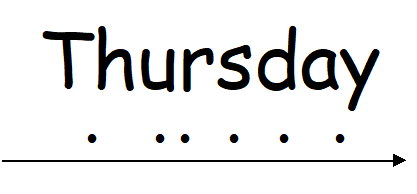
4.) The graphemes of Thursday are <th.u.r.s.d.ay>. The <th> and <ay> are digraphs, or a grapheme that consists of two letters.
Squash
1.) Squash is a noun that means “the edible or decorative gourd fruit of some vined plants,” not to be confused with the homograph squash meaning “(1) crush, squeeze, compress, press” and “(2) a racket game played with a soft rubber ball (named after the squashy ball),” which comes from a different etymological source.
2.) Squash is a simple word, or a word that consists of a single morpheme (free base). The free base is <Squash>.
First attested in the 1640s in American English, quash is clip of Narraganset (Algonquian) askutasquash, which literally means “the things that may be eaten raw” and that comes from the compound of askut meaning “green, raw, uncooked” and asquash meaning “eaten.” The final -ash is a plural affix that also occurs in succotash.
3.) <Squash> affixes to form morphological relatives.
<Squash + es → squashes>
<Squash + y → squashy>
<Squash + y + er → squashier>
<Squash + y + est → squashiest>
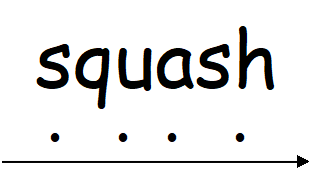
4.) The graphemes of squash are <s.qu.a.sh>. The <qu> and <sh> are digraphs, or a grapheme that consists of two letters.
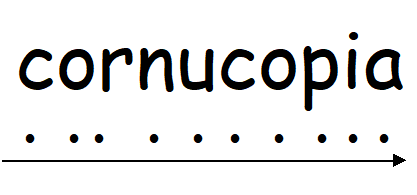
Cornucopia
1.) Cornucopia is a noun that means (1) “horn of plenty, a symbol of abundance and nourishment” and (2) “an abundant supply of good things of a specific kind.”
2.) Cornucopia is a compound-complex word, or a word that contains multiple bases and affixes (prefixes and/or suffixes).
<Cornu + Copy + a → cornucopia>
First attested in the 1590s, cornucopia comes from Latin cornucopia, a compound of the phrase cornu copiae meaning “horn of plenty” and originally referring to the horn of the goat Amalthea, who nurtured the infant Zeus.
The bound base <Cornu> comes from Latin cornū, a singular noun whose plural form is cornua, and denotes “horn.” The <u> is part of the singular noun and not a separate ending. Latin cornū also gives English the bound base <Corn> denoting “horn” as in cornea and unicorn.
The free base <Copy> comes from Old French copie and Medieval Latin copia from Latin cōpia, from cōps + -ia from com + ops (genitive opis). The Latin -ia became the English -y.
The suffix -a comes from Latin -a and denotes “singular noun suffix.” The Latin plural of -a is typically the suffix -ae.
3.) As a bound base, <Cornu> must compound and/or affix to form a word including morphological relatives of cornucopia. <Copy> both compounds and affixes. The <y> in <Copy> toggles with <i> when followed by a suffix that begins with a vowel.
<Cornu + Copy + a + s → cornucopias>
<Cornu + Copy + ae → cornucopiae>
<Cornu + Copy + an → cornucopian>
<Cornu + Copy + ate → cornucopiate>
<post + Cornu → postcornua>
<Une + i + Corn → unicorn>
<Corn + e + a → cornea>
<Corn + e + al → corneal>
<Copy + ous → copious>
<Copy + ous + ly → copiously>
4.) The graphemes of cornucopia are <c.o.r.n.u.c.o.p.i.a>.
Delicious
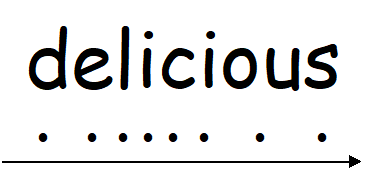
1.) Delicious is an adjective meaning “tasty, pleasing.”
2.) Delicious is a complex word, a word that contains affixes (prefixes and/or suffixes).
<de + Lice + i + ous → delicious>
First attested in c.1300, delicious comes from Middle English delicious from Anglo-Norman delicious from Old French delicious, delicieux from Latin dēliciōsus from delicia (plural deliciae) meaning “delight, allurement, charm” from delicere from de- meaning “away” and -licere, the combining form of lacere meaning “to lure, entice.”
The prefix de- comes from Latin de and denotes “away.”
The bound base <Lice> comes from Latin -licere, the combining form of lacere, and denotes “lure, entice, ensnare.”
The connecting vowel -i- comes from Latin -i- and connects morphemes.
The suffix -ous comes from Old French -ous, -eux from Latin -ōsus and is an adjective suffix denoting “having, full of, having to do with, doing, inclined to.”
3.) As a bound base, <Lice> must attach to at least one other morpheme to form a word. <Lice> can compound and affix to form morphological relatives.
<de + Lice + i + ous + ly → deliciously>
<de + Lice + i + ous + ness → deliciousness>
<de + Lice + ate → delicate>
<de + Lice + acy → delicacy>
<e + Lice + it(e) → elicit>
The intensive suffixes -licious and -alicious come from the word delicious.
<Booty + licious → bootylicious>
<Pink + alicious → pinkalicious>
4.) The <ou> is a digraph, or a grapheme that consists of two letters. The second <i> marks the phonology of the <c>.
Acorn
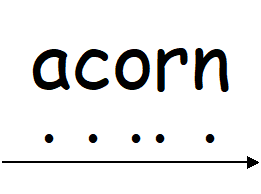
1.) Acorn is a noun that means “oak nut.”
2.) Acorn is a simple word, or a word that consists of a single morpheme (free base). The free base is <Acorn>.
Acorn is an old word, developing from Middle English acorn, akorn from Old English æcern, which is a common Germanic word.
3.) <Acorn> can compound and affix to form morphological relatives.
<Acorn + s → acorn>
<Acorn + ed → acorned>
<Acorn + Like → acornish>
<Acorn + y → acorny>
An etymological relative is eggcorn, which means “a word or phrase that results from a mishearing or misinterpretation of another, an element of the original being substituted for one that sounds very similar or identical.” The linguistic term eggcorn arose from mishearing the word acorn as eggcorn.
4.) The graphemes of acorn are <a.c.o.r.n>.
Potato
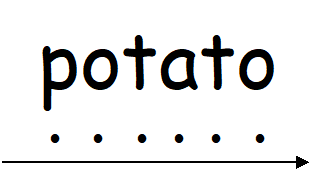
1.) Potato is a noun meaning “a starchy plant tuber eaten as a vegetable.”
2.) Potato is a simple word, or a word that consists of a single morpheme (free base). The free base is <Potato>.
First attested in the 1560s, potato comes from Spanish patata from Taíno batata meaning “sweet potato.” Originally referring to the sweet potato, the word expanded semantically in the 1590s to include the common white potato.
3.) <Potato> can compound and affix to form morphological relatives.
<Potato + es → potatoes>
<Potato + Like → potatolike>
<Potato + ey → potatoey>
<Potato + ish → potatoish>
Why does potatoes take the suffix -es and not the allomorph -s? Words that end with a penultimate consonant and final <o> often take the –es suffix as in tomatoes, heroes, and vetoes.
The spelling of potato influenced the spelling of tomato.
The word tater is an aphetic variant potato. Aphesis refers to the loss of an initial unstressed vowel.
4.) The graphemes of potato are <p.o.t.a.t.o>.
Corn
1.) Corn is a noun that means “cereal plant.”
2.) Corn is a simple word, or a word that consists of a single morpheme (free base). The free base is <Corn>, which is a homograph of the bound base <Corn> denoting “horn.”
Corn is another old word, developing from Middle English corn from Old English corn. However, the word originally referred to any cereal crop but narrowed semantically to mean American indigenous maize around 1600.
3.) <Corn> can compound and affix to form morphological relatives.
<Corn + Bread -> cornbread>
<Corn + Meal -> cornmeal>
<Corn + Flake -> cornflake>
<Corn + Starch -> cornstarch>
<Corn + Stalk -> cornstalk>
<Corn + y -> corny>
<Corn + ish → cornish>
4.) The graphemes of corn are .

Pumpkin
1.) Pumpkin is a noun that means “a large rounded orange-yellow fruit with a thick rind, edible flesh, and many seeds.”
2.) Pumpkin is a simple word, or a word that consists of a single morpheme (free base). The free base is <Pumpkin>.
First attested in the 1640s, pumpkin comes from Early Modern English pompone, pumpion from Middle French pompon from Latin peponem from pepō from Ancient Greek pépōn from pésein.
Pumpkin does not contain any suffixes.
3.) <Pumpkin> can compound and affix to form morphological relatives.
<Pumpkin + s → pumpkins>
<Pumpkin + Seed → pumpkinseed>
<Pumpkin + Seed + s → pumpkinseeds>
<Pumpkin + ish → pumpkinish>
<Pumpkin + y → pumpkiny>
4.) The graphemes of pumpkin are <p.u.m.p.k.i.n>.

Image Credits
Thanksgiving, Spelling, and Structured Word Inquiry: https://commons.wikimedia.org/wiki/File:Male_wild_turkey_(Meleagris_gallopavo)_strutting.jpg and https://commons.wikimedia.org/wiki/File:Cornucopia_of_fruit_and_vegetables_wedding_banquet.jpg