Are you planning to homeschool your child in seventh grade but feeling uncertain about where to begin or which materials to select? Every child is different, so no single curriculum is a perfect match for every student. Homeschooling thus allows the flexibility to tailor resources to individual needs. While I generally stick to the same materials for all my children, I make adjustments by adding or removing items as needed. Overall, I use a combination of workbooks and various other resources for our seventh grade homeschool curriculum. Below are the materials that I used with my first child and that I plan to use again with my second, third, and fourth children. If you are interested in any of the materials, easily find copies on Amazon via my affiliate links.
I begin homeschooling each of my children around age 3 with preschool. After two years, we transition to kindergarten at about age 5. First grade follows at age 6, with second grade at 7 and third grade at 8. Typically, fourth grade starts at age 9, fifth at age 10, and sixth at 11, with seventh grade beginning around age 12. We aim to complete around 180 days of instruction for each grade, working four days a week. If a day is missed, we make it up the week before or after to stay on track. This schedule allows us to finish each grade level in roughly 42 weeks, with field trips also counting toward our school year.
Of the many materials that I use with my seventh graders, the most important to me is Teach a Student to Spell: Level 6. The Teach a Student to Spell series is the follow-up workbook series to the Teach a Student to Read reading program, which strives to teach students accurate and complete information about the English spelling system. I am also working on a workbook for seventh grade as park of my Form-Function English Grammar series. The Form-Function English Grammar series is the elementary series that builds up to A Form-Function Description of the Grammar of the Modern English Language, a textbook and workbook that provides a descriptive grammar that strives to provide an objective description of English as used without value judgements.

- Kosur, Heather Marie (Author)
- English (Publication Language)
- 526 Pages – 09/06/2021 (Publication Date) – Independently published (Publisher)
Originally published on August 18, 2020. Updated on August 12, 2024.
Reading
Developing strong reading skills in seventh grade is crucial for understanding complex texts and enhancing critical thinking abilities. A well-rounded reading curriculum helps my kiddos analyze literature, improve comprehension, and expand their vocabulary. I introduced the Language of Literature series from McDougal Littell at the end of sixth grade. For seventh grade reading, we continue using the series with the 1120-page Language of Literature (Grade 6) in sixth grade. We complete Unit 1 in sixth grade and continue with the textbook in seventh grade. We then move on to 1136-page Language of Literature (Grade 7). Both textbooks include a variety of texts from a variety of authors. We also use the comprehension and critical thinking questions along with the vocabulary exercises after each reading passage. The strong reading skills that my seventh graders further develop help with academic success in subsequent grades and multiple subjects.

- Used Book in Good Condition
- Hardcover Book
- MCDOUGAL LITTEL (Author)
- English (Publication Language)
- 1120 Pages – 04/14/2005 (Publication Date) – MCDOUGAL LITTEL (Publisher)

- Hardcover Book
- Applebee (Author)
- English (Publication Language)
- 882 Pages – 02/20/2026 (Publication Date) – McDougal Littell/Houghton Mifflin (Publisher)
Writing
Our seventh grade writing curriculum focuses on refining writing skills across various styles including narrative, informational, and opinion writing. The materials that I chose place emphasis on mastering the writing process, from brainstorming ideas to final revisions, skills that are crucial for effective communication. My kiddos additionally strengthen their understanding of punctuation and grammar, ensuring clarity and precision in their writing, through a punctuation workbook.
For formal writing lessons, we continue using the Spectrum Writing series in our curriculum, using the Spectrum Writing Grade 7 workbook in seventh grade. The 136-page workbook teaches basic writing skills such as the writing process, story writing, informational writing, and opinion writing through a variety of creative writing prompts and writing practice activities. The workbook also includes some technical activities such as citing sources, which becomes increasingly important in the higher grades.

- Excellent writing series based on current State Standards
- Helps students build and strengthen writing skills in all areas
- Lessons include engaging, open-ended grade appropriate writing projects combined with standards-based learning
- Easy step-by-step instructions help with planning, drafting, revising, proofreading and sharing
- Includes a writer’s handbook to reinforce grammar and language skills
For punctuation lessons, we use How to Punctuate from Teacher Created Resources. The 48-page workbook covers end marks, abbreviations, commas, semicolons, colons, underlining and italics, quotation marks, apostrophes, and hyphens. The reproducible workbook also includes a unit assessment and answer sheets.

- Teacher Created Resources Staff, Michelle (Author)
- English (Publication Language)
- 48 Pages – 07/01/1999 (Publication Date) – Teacher Created Resources (Publisher)
For writing practice multiple days a week, I also include The Writing Prompts Workbook, Grades 7-8 in our seventh grade writing curriculum. My seventh graders complete the first 100 prompts followed by the second 100 prompts in eighth grade. The workbook provides a collection of imaginative situations and questions that get children writing. Do note that the prompts are not entirely secular but do include some questions about religion.

- Used Book in Good Condition
- Cohen, Bryan (Author)
- English (Publication Language)
- 112 Pages – 04/25/2012 (Publication Date) – Build Creative Writing Ideas (Publisher)
Vocabulary
I began including vocabulary as an individual subject in third grade. In seventh grade, I designed our vocabulary curriculum to significantly expand word knowledge and improve language skills. My kiddos focus on learning essential vocabulary through engaging lessons and activities that reinforce understanding and usage. By mastering these words, my children enhance their reading comprehension, writing precision, and overall communication abilities, skills needed to succeed in subsequent higher grades.
For vocabulary, we use The Vocabulary Builder Workbook: Simple Lessons and Activities to Teach Yourself Over 1,400 Must-Know Words in seventh and eighth grade. The book contains 200 lessons. My seventh grader completes the first 100 lessons followed by the second 100 lessons in eighth grade. For each lesson, my child does the activity included in the book and then writes a sentence for each word to demonstrate understanding of the meaning and use.

- Lele, Chris (Author)
- English (Publication Language)
- 254 Pages – 03/20/2018 (Publication Date) – Callisto (Publisher)
Spelling
Rather than using word lists for spelling, I introduced word study using Structured Word Inquiry in first grade. For my main resource, I use the InSight Words decks from Linguist-Educator Exchange.
I also created the Teach a Student to Spell: Level 6 workbook for spelling lessons as a follow up to Teach a Student to Read. Level 6 covers grades 7 and 8. Level 6 consists of 36 lists of one to four bases each. The number of bases in each list depends on the size of the word family. (One base is divided into two lessons because of the number of words in the word family.) The activities focus on the four questions of Structured Word Inquiry: (1) What does a word mean? (2) How is the word built? (3) What are morphological and etymological relatives of the word? and (4) What are the sounds that matter? What are the letters doing? The goal of Level 6 is to study the spelling of English words using the Structured Word Inquiry framework. Level 6 builds on the spelling rules introduced in Level 3, Level 4, and Level 5. Level 6 also reinforces the prefixes, suffixes, and connecting vowels from Level 2, Level 3, Level 4, and Level 5 while introducing additional prefixes and suffixes.
My seventh grader completes lists 1 to 18 of level 6 during seventh grade.
- Kosur, Heather Marie (Author)
- English (Publication Language)
- 526 Pages – 09/06/2021 (Publication Date) – Independently published (Publisher)
Math
In seventh grade math, we begin our focus on building a strong foundation in prealgebra, which is essential for success in higher-level math courses like Algebra 1. My kiddos develop key skills in topics such as whole numbers, integers, fractions, and geometry, ensuring adequate preparation for the challenges of algebra. By the middle of the year, my seventh graders transition smoothly into Algebra 1, mastering critical concepts like equations and polynomials through a structured and comprehensive curriculum.
After completing Singapore Math in sixth grade, we moved on to Prealgebra from Derek Owens. The online course covers the topics normally covered in a middle school prealgebra course and is designed to prepare students for Algebra 1. This middle school prealgebra course prepares students for Algebra 1 by covering fundamental math topics such as whole numbers, integers, fractions, decimals, and geometry. The online version of the course includes videos through which students work through a comprehensive workbook that mirrors the notes that the instructor uses. Students complete practice problems, homework, and tests. We continue prealgebra in seventh grade if needed. I chose the self-graded option, which is slightly less expensive, and grade all homework and tests myself using the provided answer keys.
We then move on to Algebra 1 from Derek Owens. Typically taken by students in eighth or ninth grade, the online course covers the topics normally covered in a first year high school algebra course. The course covers the fundamental topics typically found in a first year high school algebra curriculum such as equations, polynomials, and quadratic functions. The course offers both regular and honors levels, allowing students to choose the appropriate level of challenge, with lectures supplemented by online videos and practice workbooks. We complete the entire class during seventh grade. I again chose the self-graded option.
Science
Our seventh grade science curriculum focuses on developing a deep understanding of key biological and environmental concepts. My kiddos explore topics like plant biology, animal science, human health, and earth science, which help build critical thinking and analytical skills. This foundation provides a basis for more advanced scientific studies and fosters a lifelong interest in the natural world.
Beginning in seventh grade, we use the Prentice Hall Science Explorer series, which consists of 16 textbooks. My seventh graders complete the first seven textbooks followed by the final nine textbooks in eighth grade. The first seven books are (1) From Bacteria to Plants, (2) Animals, (3) Cells and Heredity, (4) Human Biology and Health, (5) Environmental Science, (6) Inside Earth, and (7) Earth’s Changing Surface. My kiddos complete the review questions at the end of each lesson as well as the test questions after each chapter.

- Hardcover Book
- Jenner, Jan (Author)
- English (Publication Language)
- 214 Pages – 02/20/2026 (Publication Date) – Pearson Prentice Hall (Publisher)

- Hardcover Book
- Jenner, Jan (Author)
- English (Publication Language)
- 214 Pages – 12/07/2007 (Publication Date) – Pearson Prentice Hall (Publisher)

- Hardcover Book
- Padilla, Michael J. (Author)
- English (Publication Language)
- 210 Pages – 01/15/2006 (Publication Date) – Prentice Hall (Publisher)

- Hardcover Book
- Padilla, Michael J. (Author)
- English (Publication Language)
- 292 Pages – 02/20/2026 (Publication Date) – Pearson Prentice Hall (Publisher)

- Hardcover Book
- Padilla, Michael J. (Author)
- English (Publication Language)
- 230 Pages – 02/20/2026 (Publication Date) – Pearson Prentice Hall (Publisher)

- Hardcover Book
- Padilla, Michael J. (Author)
- English (Publication Language)
- 214 Pages – 02/20/2026 (Publication Date) – Pearson Prentice Hall (Publisher)

- Hardcover Book
- Padilla, Michael J. (Author)
- English (Publication Language)
- 02/20/2026 (Publication Date) – Pearson Prentice Hall (Publisher)
Social Studies
Our seventh grade social studies curriculum focuses on building a strong foundation in world and American history. My kiddos explore key events and civilizations from ancient times to modern-day, developing critical thinking and comprehension skills. Interactive activities and detailed lessons provide a deeper understanding of historical contexts and their significance in shaping the world today.
To begin seventh grade social studies, we study world history and American history using Everything You Need to Ace World History in One Big Fat Notebook and Everything You Need to Ace American History in One Big Fat Notebook. World History starts with the Paleolithic Era and ancient civilizations and continues through the present. American History covers American history from Colonial America, the Revolutionary, western expansion, the Civil War and Reconstruction, and notable events of the twentieth century. Both books include questions (with answers) after each lesson. The information covered in both books provides a good foundation for future history studies.
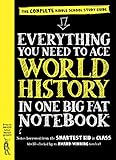
- Workman Publishing (Author)
- English (Publication Language)
- 528 Pages – 08/09/2016 (Publication Date) – Workman Publishing Company (Publisher)
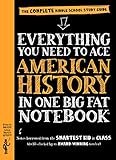
- Part of a 5-book series for each main subject taught in middle school: Math, Science, American History, English Language Arts, and World History
- Young readers will find every subjects key concepts, easily digested and summarized, with critical ideas highlighted in neon colors and definitions explained
- Includes doodles that illuminate tricky concepts in marker, mnemonics for memorable shortcuts, and quizzes to recap it all
- BIG FAT NOTEBOOKS meet Common Core State Standards, Next Generation Science Standards, and state history standards
- Workman Publishing (Author)
We finish seventh grade social studies with two History Pockets workbooks from Evan-Moor: History Pockets: Ancient Greece and History Pockets: Ancient Rome. The reproducible activity books teach information about each time period complete with illustrations, arts and crafts projects, and writing activities. My children complete each section over one or two days with a culminating portfolio to show their study of time period in history.

- arts and crafts projects
- Evan-Moor Educational Publishers (Author)
- English (Publication Language)
- 96 Pages – 01/01/2003 (Publication Date) – Evan-Moor Educational Publishers (Publisher)

- Evan-Moor Educational Publishers (Author)
- English (Publication Language)
- 96 Pages – 01/01/2008 (Publication Date) – Evan-Moor Educational Publishers (Publisher)
Health
Our seventh grade health curriculum focuses on guiding preteens through the changes of puberty, addressing both physical and emotional development. The curriculum emphasizes self-care, social skills, and understanding the importance of mental and physical well-being. By covering these topics, my kiddos gain the knowledge and confidence needed to navigate adolescence healthily and positively.
For seventh grade health, my daughters start with Celebrate Your Body (and Its Changes, Too!): The Ultimate Puberty Book for Girls and Celebrate Your Body 2: The Ultimate Puberty Book for Preteen and Teen Girls. Recommended for readers between the ages of 8 and 12, the 174-page Celebrate Your Body is a body-positive guide that helps girls navigate the changes of puberty and grow into women. The book covers physical changes, emotional changes, social skills, self-care tips, and more. Recommended for readers between the ages of 10 and 18, the 188-page Celebrate Your Body 2 is a puberty guide for tween and teen girls. The book covers body changes, emotions, self-esteem, friendships, and more.

- Taylor, Sonya Renee (Author)
- English (Publication Language)
- 174 Pages – 05/29/2018 (Publication Date) – Callisto Kids (Publisher)

- Leff, Dr. Carrie (Author)
- English (Publication Language)
- 188 Pages – 11/19/2019 (Publication Date) – Callisto Kids (Publisher)
My son starts with American Medical Association Boy’s Guide to Becoming a Teen and Guy Talk: The Ultimate Boy’s Body Book with Stuff Guys Need to Know while Growing Up Great! Recommended for readers between the ages of 10 and 13, the 128-page Boy’s Guide to Becoming a Teen offers invaluable advice for getting ready for the changes experienced during puberty. The book covers physical changes, emotional changes, self-care, relationships, and more. The 96-page Guy Talk is an illustrated, easy-to-read guide about navigating puberty. The book covers body changes, personal hygiene, healthy eating, tips for sensitive topics, and more.

- American Medical Association (Author)
- English (Publication Language)
- 128 Pages – 05/26/2006 (Publication Date) – Jossey-Bass (Publisher)

- Editors of Cider Mill Press (Author)
- English (Publication Language)
- 96 Pages – 02/02/2021 (Publication Date) – Applesauce Press (Publisher)
After covering puberty, we use the first half of Prentice Hall Health for seventh grade health. The 782-page covers mental health, social health, nutrition, physical fitness, substance abuse, human development, preventing disease, and community health and safety. We complete the first 13 chapters in seventh grade and then finish the book in eighth grade.

- Hardcover Book
- Pruitt, B. E. (Author)
- English (Publication Language)
- 782 Pages – 01/06/2007 (Publication Date) – Pearson Prentice Hall (Publisher)
Art
For our seventh grade art curriculum, we delve into key art movements and techniques through a concise exploration of influential works to build a comprehensive understanding and appreciation of art. We read The Short Story of Art. The 224-page book explores 50 key works and then links each work to art movements, themes, and techniques. Through an accessible and concise style, the book simplifies and explains the most important and influential concepts in art while demystifying artistic jargon to gives readers a thorough understanding and broad enjoyment of art.

- English (Publication Language)
- 224 Pages – 05/02/2017 (Publication Date) – Laurence King Publishing (Publisher)
Music
For our seventh grade music curriculum, we explore fundamental concepts of music theory through a clear and engaging examination of influential classical works and their historical impact. We use The Classical Music Book: Big Ideas Simply Explained of the DK Big Ideas series from DK. As with the other titles in the series, the book presents complex topics and themes in a simple and easy-to-follow format. By discussing more than 90 pieces of world-famous music, the book provides a captivating introduction to music theory, crucial composers, and the impact of seminal pieces. The discussion of classical music starts with early music starting around 1000 and progresses through to the contemporary era.

- Hardcover Book
- DK (Author)
- English (Publication Language)
- 352 Pages – 08/28/2018 (Publication Date) – DK (Publisher)
Printable Schedule
Because I am a homeschooling mom of four children, I have created yearly schedules for each grade to help me keep track of the work that needs to be completed in each subject each week. Our schedules make sure that we complete all work in each subject in each grade in a timely manner. The schedules also help us spread out the work over the entire grade without cramming too much in at any one time. Our schedules are designed for four days of work for forty-two weeks a year. Feel free to use our Grade 7 Schedule in your own homeschool.
Pin to Pinterest